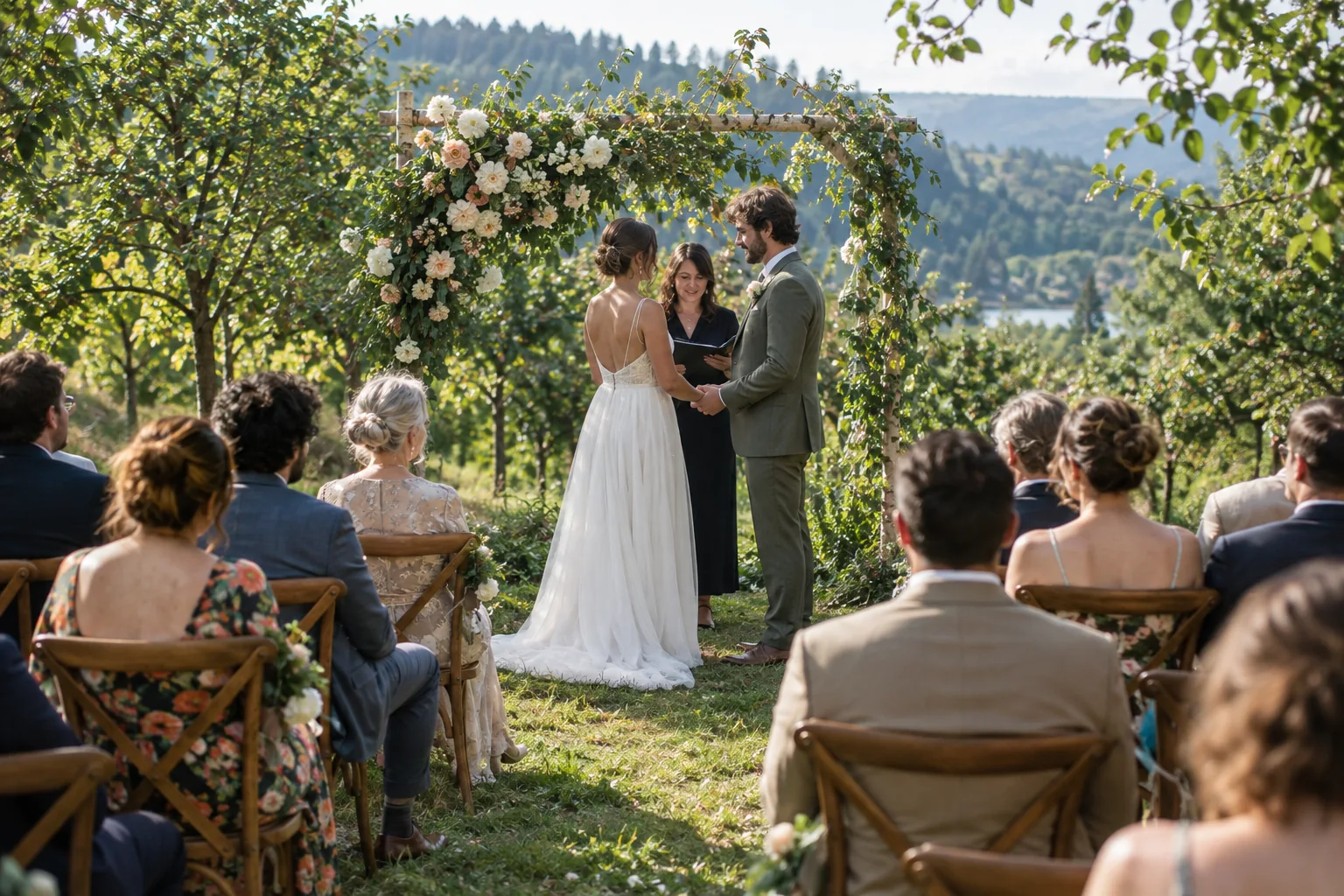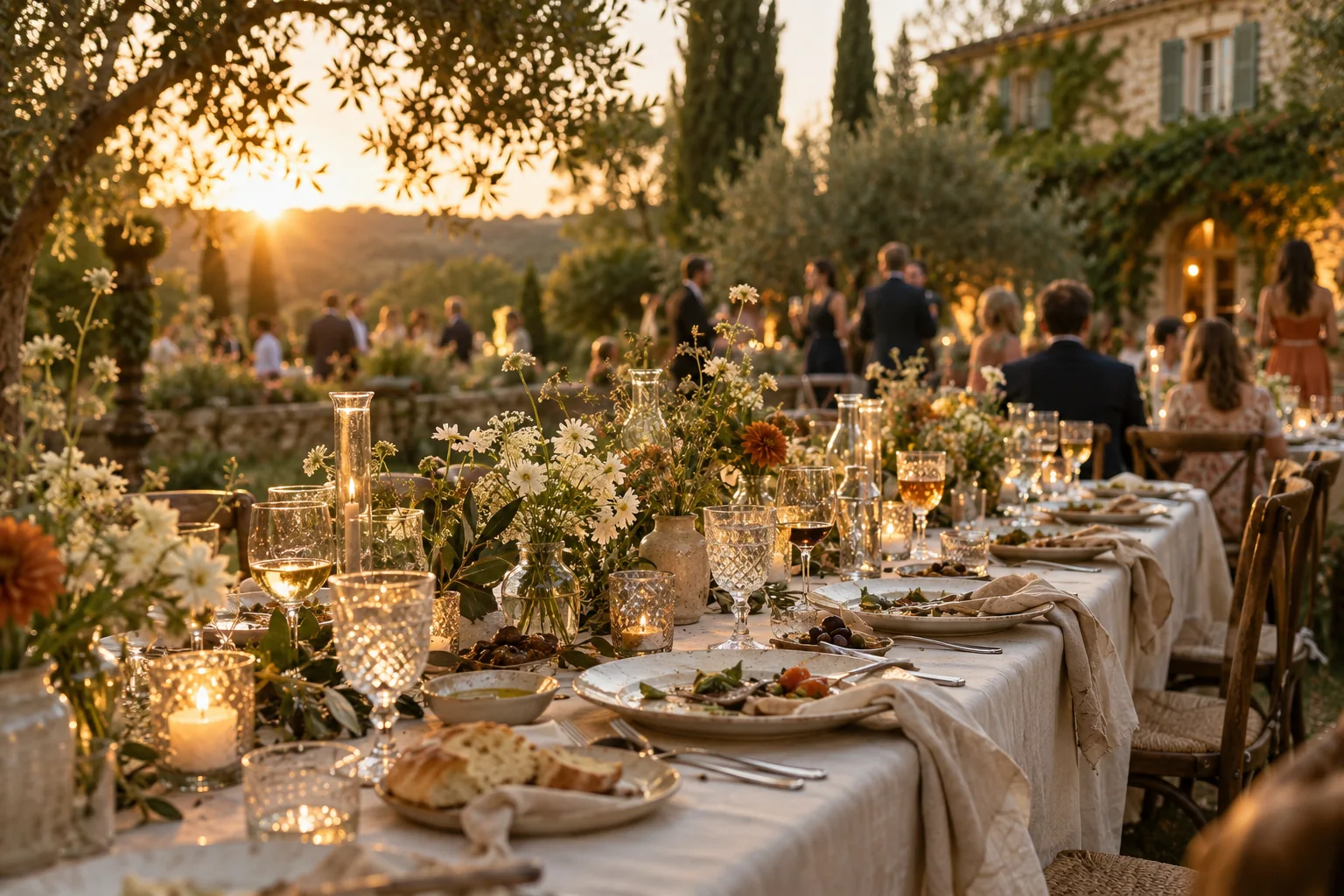
A memorable reception gives guests a clear place to be, good food at a sensible hour, and enough breathing room to connect. Elaborate décor helps only when the basics work. Start with the guest's path from arrival to departure.
Make arrival easy
Tell guests where to enter, where to put coats, and when drinks or food begin. A single welcome sign may be enough if the venue is straightforward; a large property might need human guidance at the right door. If parking is remote or the path is uneven, share that detail before the event. Check whether the first arriving guests will have somewhere comfortable to wait.
Keep the transition from ceremony to dinner deliberate. If portraits require a long gap, provide seating, shade, water, and substantial snacks. For a shorter event, move directly into a gathering space near the dining room.
Choose food service for the room, not the photograph
Buffets can offer choice but need space and a plan for dismissing tables. Plated dinners can feel smooth when the kitchen has accurate meal selections. Family-style service invites conversation but requires enough table area. Ask caterers how long each format takes with your guest count and what they do for allergies. Taste and timing matter more than the visual trend.
Late-night food works if guests are still present and hungry; otherwise spend that money on the main meal. Place water where guests can find it throughout the night, including near the dance floor.
Give speeches a shape
Invite speakers ahead of time, agree on a speaking order, and suggest a short length. Put speeches near a natural pause, perhaps before dessert. Ask the person with the microphone to introduce each speaker and know when the next part begins. A toast need not be a roast. The best ones share one concrete story and end with a generous wish.
Music that supports more than dancing
Think in chapters: arrival, meal, and later celebration. During dinner, the goal is conversation, so test the volume in the actual room. If dancing matters, leave enough floor space and tell the DJ or band what songs are welcome and which are not. If dancing is not your group's style, offer a comfortable lounge area, a late coffee service, or a shared activity that guests may choose to join.
For a smaller guest list, see our intimate celebration ideas. A thoughtfully paced meal can be the event; it does not need the same sequence as a ballroom reception.
Small touches people notice
- Table numbers large enough to read from a few steps away.
- A clear dietary marker or staff member who can answer ingredient questions.
- A quiet seat away from speakers for older guests and anyone who needs a break.
- Transportation instructions that include an actual pickup point.
- A short thank-you from the couple if a long receiving line would be difficult.
These touches cost less than a dramatic installation and solve problems guests will otherwise remember. If your venue has stairs, confirm an accessible route to every part of the event rather than only the entrance.
Plan the exit before the evening starts
Ask the venue when music must end, when vendors must clear the space, and who collects gifts and personal items. Assign one trusted person to take home the card box and another to check the getting-ready room. If the couple leaves early, specify who can approve small last-minute decisions. A calm ending gives the celebration a better final impression than an abrupt lights-on scramble.
Use the week-before guide to turn these details into a concise run sheet. Keep it with vendor contacts and one person who can act on it.
Match the layout to the conversations you want
Walk the room as a guest would. Can someone reach water without crossing the dance floor? Will a wheelchair user have a clear path between tables? Are older relatives seated away from the loudest speakers? Put tables near enough that the room feels connected but far enough apart for servers and guests to move safely.
At a long table, guests mostly speak with nearby neighbors. If you have groups who do not know one another, consider thoughtful seat pairings and give the couple time to circulate. At round tables, avoid packing every chair available simply to save floor area; crowded settings make dinner awkward.
Choose one or two memorable moments
You do not need a constant sequence of surprises. A favorite song after dinner, a family recipe served at dessert, or a short story about why you chose the venue may say more than a dozen activities. Ask yourself what you would enjoy as a guest. Make participation easy to decline, especially for games that call people into the spotlight.
Before booking a photo booth or extra station, check power, staffing, queue space, and the venue's end time. An idea is successful when it fits the flow of the evening rather than competing with dinner or good conversation.
Build a sensory comfort check
Visit the space when it is busy, if possible. Listen to how voices carry and notice the temperature near windows or doors. Ask whether lighting can be adjusted between dinner and dancing. Guests who need quieter conversation should have a place to sit without leaving the celebration entirely.
Plan for water, a nonalcoholic drink, and food people can eat across common dietary needs. If the meal includes unfamiliar ingredients, labels or informed staff help guests choose. A memorable reception is often the one where nobody had to ask three times for basic information.
From the editors
Dec Wedding focuses on useful choices and clear examples. Venue policies, prices, and local marriage requirements can change; confirm details directly with the relevant provider before making plans. How we work.