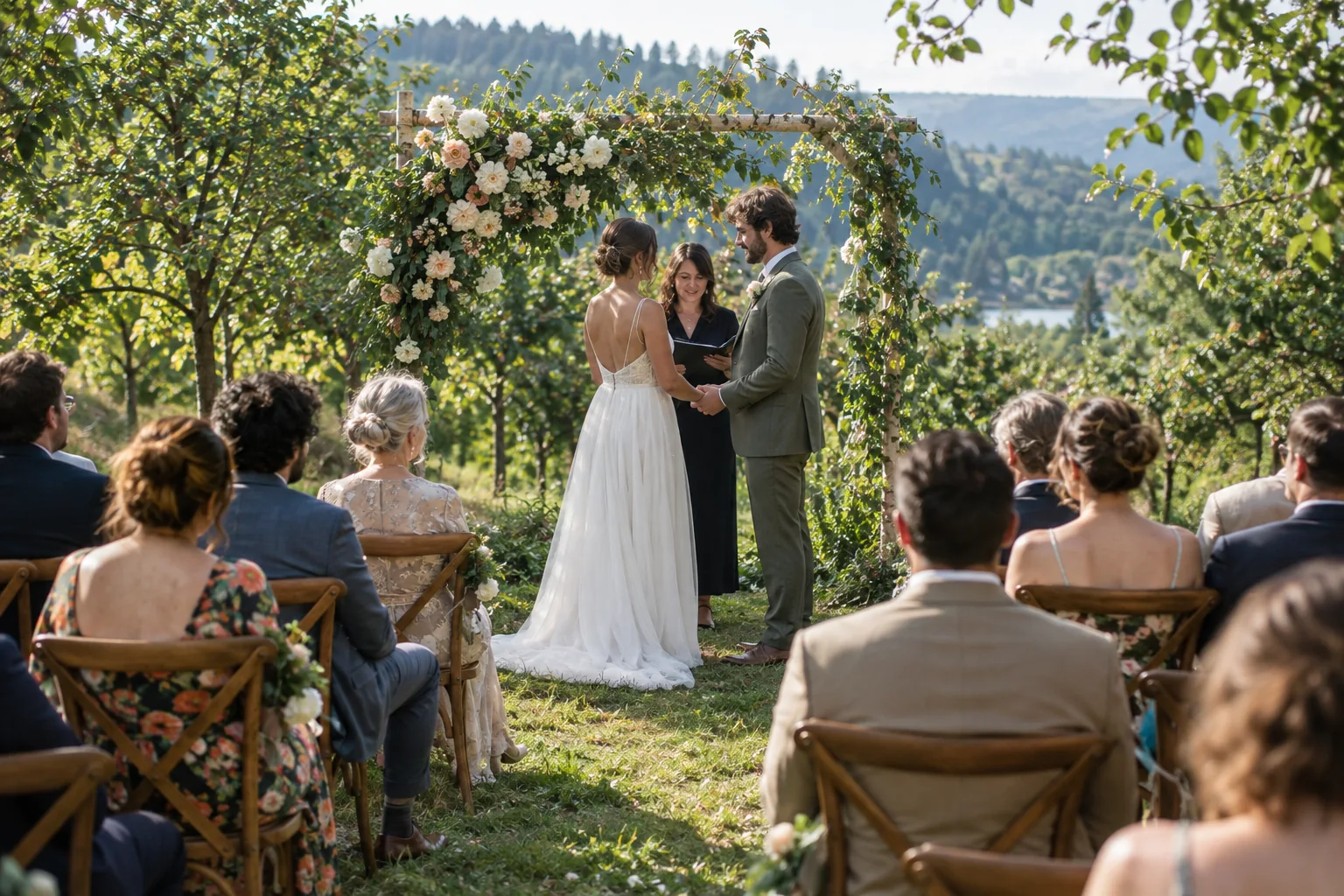
A small wedding is not simply a large wedding with fewer chairs. A smaller guest list lets you give more attention to conversation, food, and the details that make people feel included. It also makes every logistical choice more visible. Here are ideas that use that intimacy well.
Choose a space that fits the group
A room built for 200 can make 24 guests feel scattered. Look for a restaurant private room, a garden with a covered alternative, a small gallery, or a home with a practical floor plan. Check accessible entry, restrooms, sound rules, weather backup, and where the caterer can work. A lovely location is only useful if everyone can reach it and stay comfortable.
Arrange seats in a semicircle or two short rows for the ceremony so guests can see and hear without amplification. If the setting is outdoors, test the space at the same time of day you plan to gather. Wind, glare, and nearby traffic are easier to notice on site than in photos.
Make the meal the center of the gathering
One long table encourages conversation, but it may be awkward for a group that cannot hear across it. Two smaller tables can be better. A family-style meal feels generous when serving is organized; a restaurant menu gives people choice with less setup. Ask in advance about allergies and dietary needs, and make the response deadline early enough for the kitchen.
Consider a short welcome drink, a seated meal, and a relaxed dessert instead of filling every hour with programmed moments. Guests remember being able to speak with the couple. Our reception ideas include low-pressure activities that work particularly well in a smaller room.
Invite people into the ceremony
Ask one person to read a short passage or have a few guests share a brief wish over dinner. Give them a clear invitation and permission to decline. You can also write a sentence about why each guest matters in a place card or welcome note. Keep contributions optional; intimacy does not require putting shy guests on the spot.
If you have friends who cannot attend, set aside a quiet call earlier in the week rather than broadcasting the full event without a plan. A short recording of the vows may be more meaningful than a complicated live stream with unreliable sound.
Use the budget in ways people can feel
Smaller numbers may free money for better food, a photographer whose work you love, comfortable transportation, or a longer stay with family. They do not automatically make the event inexpensive: some venues have minimum spending, and rentals have fixed delivery charges. Compare total quotes, not just the per-person number. Reserve funds for taxes, gratuities, and last-minute changes.
Thoughtful ideas that scale down gracefully
- Host a ceremony at the same location as dinner so no one has to drive twice.
- Serve one signature dessert that means something to you.
- Offer a printed schedule only when the event has multiple locations or transport steps.
- Use a small arrangement of local flowers in vessels you already like.
- Ask your photographer for more candid table images and fewer staged group combinations.
- Build a playlist together and designate someone to manage volume.
Each idea should solve a real need or reflect a real preference. Avoid decorative obligations that create more setup work than pleasure.
Handling the people who are not invited
Small guest lists can create hard conversations. Agree on a rule together before explaining individual exclusions: immediate family and closest friends, for example, or only people both partners know personally. Say, “We are keeping the ceremony very small,” without suggesting a second invitation is coming unless one is. Your decision can be kind and firm at the same time. If you want to share news later, a personal note and a photo can be enough.
Use our planning checklist to work through the practical decisions before committing to a space. Then protect the best part of a small celebration: enough unhurried time with the people who came.
A sample afternoon for 30 guests
Imagine a 4 p.m. ceremony in a courtyard with chairs already set for dinner nearby. Guests arrive to cold water and a person greeting them at the gate. A 20-minute ceremony leads into a short drinks hour while immediate family photographs are taken. Dinner starts at 6 p.m., followed by three short toasts and dessert. People can stay and talk without waiting for a scheduled performance. The point is not to copy these exact times; it is to let every transition have a purpose.
Photographs without losing the gathering
Make a concise list of the family groupings that matter and tell those people when to be nearby. Ask the photographer to capture the room and conversations as well as formal portraits. If you want golden-hour pictures, plan a brief window rather than disappearing for most of dinner. With a small group, your absence is more noticeable, so choose the moments deliberately.
Small weddings can also include a larger celebration later. State clearly which event a person is invited to and avoid suggesting the later party is a consolation prize. Each gathering can have its own purpose and warmth.
Keep the timeline flexible without leaving guests guessing
An intimate event can flow informally, but guests still need to know when to arrive, whether dinner follows, and how long the gathering will last. Share those anchors clearly. You can leave the space between them loose. If you want a spontaneous toast or an unplanned walk in the garden, give the caterer and photographer a rough window so service and photographs do not collide.
There is freedom in having a shorter schedule. You can spend it on an unhurried meal, a walk with your partner, or more time speaking with every guest. Decide which one matters to you before filling the open hours.
From the editors
Dec Wedding focuses on useful choices and clear examples. Venue policies, prices, and local marriage requirements can change; confirm details directly with the relevant provider before making plans. How we work.